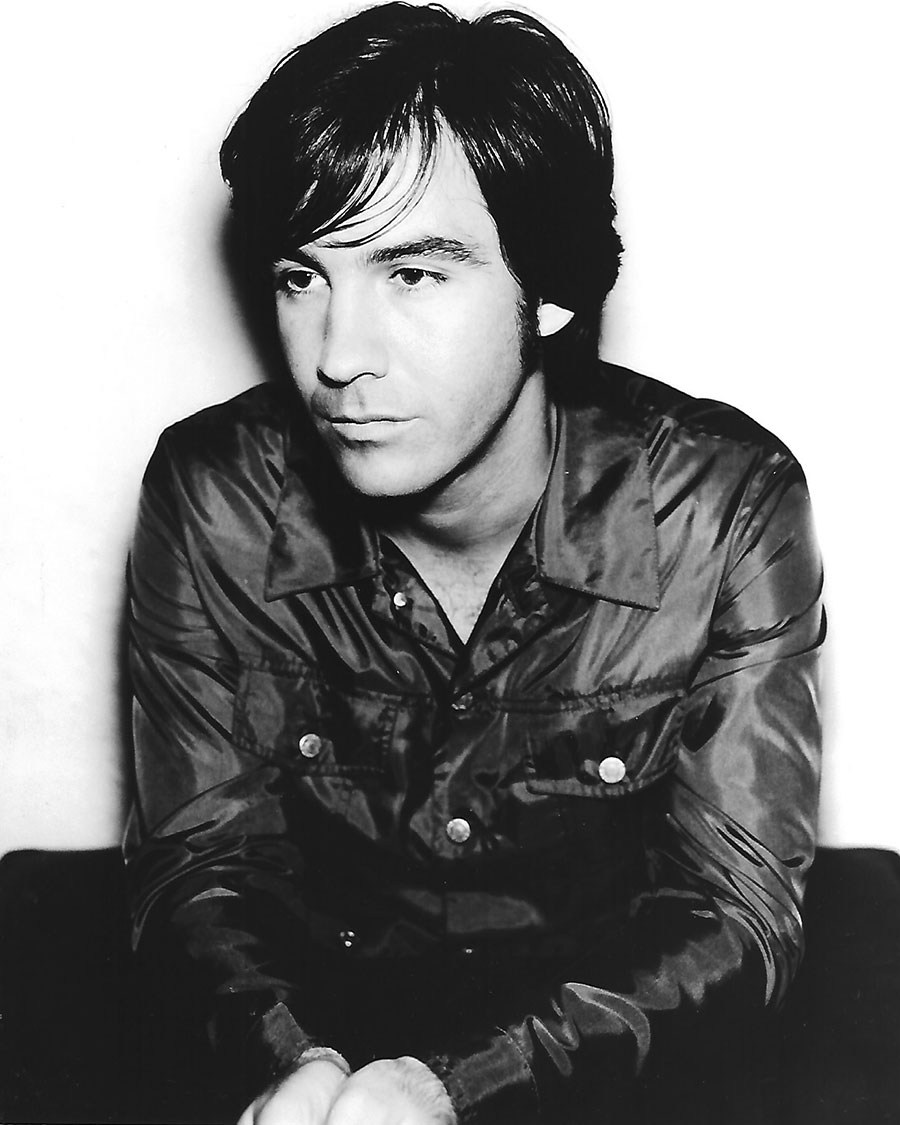
The hit “Barely Breathing” made an unlikely pop star out of Duncan Sheik, who went on to compose the Tony Award-winning musical Spring Awakening. He died September 17, 2026, at age 56.
In 1996, few singer-songwriters could conjure up the pre-MTV era of brooding images and sentiments. But Duncan Sheik’s self-titled debut album did just that. Deeply influenced by impressionistic artists, it was a rainy day/late night record—sensitive, subtle, progressive and intimate.
“There’s a certain group of beautiful records—Nick Drake’s Five Leaves Left and Pink Moon, the first two Blue Nile records, but also David Sylvian’s solo albums and Talk Talk’s Colour of Spring—that are all genius works of insane sonic beauty,” Sheik enthused prior to a concert at the Fox Theatre in Boulder. “I listened to them a great deal when I wrote my songs. If you looked at the production notes, all those names were bandied about quite a bit. It’s something I’m profoundly affected by.”
Born in South Carolina, Sheik started making music when he was “little.” At 12, he had a heavy-metal cover band, and he spent his teens worshipping ’70s art-rock. “Being a musician in some capacity has always been the case—I never questioned it. But it took me a long time to become a good performer. I was very self-conscious about my voice growing up. It wasn’t until I had a few years of voice lessons that I was able to get rid of my psychological and technical problems in that department. That helped me to come around, to be confident to get up and sing in front of people, but it was like pulling teeth for a while. That was the hardest part for me, and it’s still a process that I’m going through right now.”
Sheik refined his music at Brown University, where he majored in semiotics (and played guitar in a band with the future hitmaker Lisa Loeb). “I’d like to call it ‘contemporary philosophy of cultural production,’” he said. “You’re talking about how all these mediums, whether it’s music or film or visual arts or literature, affect society and in turn how society affects these forms of culture. It’s in the theoretical realm—you’re looking at them from different points of view, under the psychoanalyst microscope or the feminist microscope. It’s an interesting—if not the most practically useful—discipline in the world. But a lot of people who study semiotics go on to do some kind of criticism or make films. Not so many musicians, maybe.”
Duncan Sheik was recorded at a 150-year-old French chateau owned by producer Rupert Hine, best known for his work with the Waterboys, Kate Bush, Tina Turner and Howard Jones. Sheik handled vocals, guitar, keyboards and accordion. The album opened with the striking “She Runs Away,” but it was “Barely Breathing” that moved breathlessly up the singles charts. Sheik’s thoughtful, snappy tune about pernicious love ruled the airwaves for months on end—at the time, it was the fourth-longest-running single in Billboard chart history.
“It was the last song written for that collection,” Sheik said. “It’s almost a typical story that the throwaway track becomes the big hit. For me, it’s the most conventional pop song on the album in some ways. I don’t want to take anything away from it—I’m proud of it as a track. There is much more adventurous music on the rest of the record—but that depends on whether you think adventurous is a good thing or not”
On the strength of his moody lyricism, mellow tenor and good looks, Duncan Sheik earned gold certification, a Grammy nomination and a four-star-review from Rolling Stone. But he tired of the MTV heartthrob label. “I ended up having to fight the perception of being this record-company creation—people don’t understand that there’s more than just that one big hit song on the radio,” the introspective, melancholy singer-songwriter explained prior to a performance at Denver’s Bluebird Theater. “So, I made a record that, maybe a little bit on purpose, didn’t have a ‘Barely Breathing’-type song on it.”
Humming, the follow-up to Duncan Sheik, was a contemplative collection of acoustic-pop songs, once again produced by Rupert Hine. “It may be an artier record, I guess—some people say it’s a little harder to get into,” Sheik said. “I’m definitely paying the price for that, because right now in the culture, one is not rewarded for doing things that aren’t instantly gratifying.”
He referred to Humming as his “protest record.” The song “Bite Your Tongue” was “about frustrations that come up when I hear young people complaining and blaming their current problems on past generations, things outside themselves. It’s fun—it’s the new angry Duncan Sheik, but not that angry!”
Sheik went on to release several more albums throughout his career, but a decade after “Barely Breathing,” he turned his attention to musical theater and won two Tonys for composing the score and orchestrations for the long-running Broadway musical Spring Awakening, about teens coming of age in 19th-century Germany.